

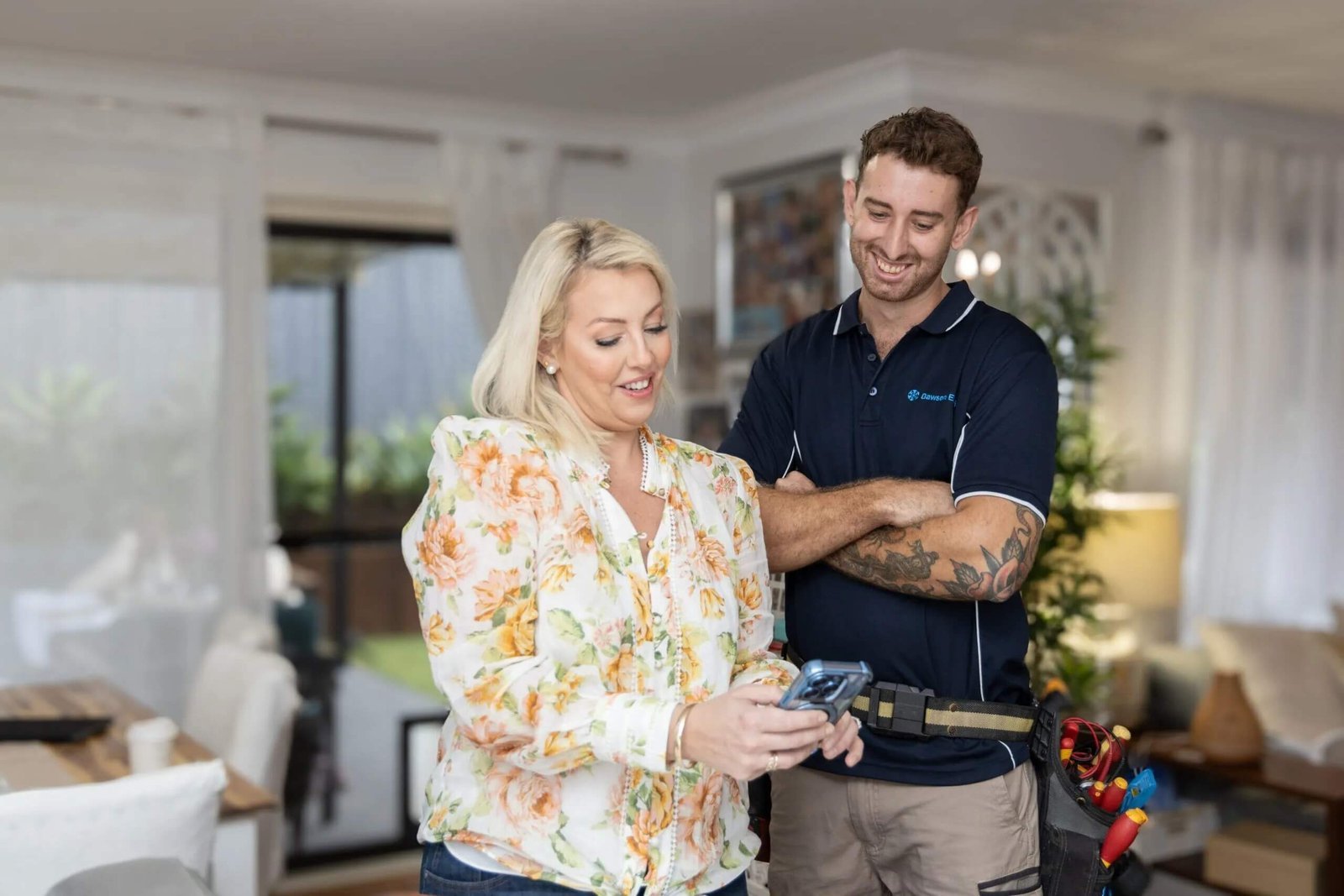
Residential electrical maintenance, in practice, means having a QBCC-licensed electrician work through the electrical system in your home on a planned basis rather than waiting for something to fail. The switchboard gets looked at. So does the wiring behind it. Outlets and safety switches get tested. The appliances drawing serious load on the system get checked too. Most electrical fires and most of the more serious shocks in residential properties come from faults that were quietly developing for months before they announced themselves, which is the point of doing this on a schedule. In Queensland, the work has to be carried out by a licensed electrician under the Electrical Safety Act 2002. It isn’t optional.
Why Is Electrical Maintenance Important for Brisbane Homes Specifically?
Brisbane is an old city in places and a brand-new one in others, which means the housing stock varies wildly in what’s behind the walls. A pre-war Queenslander on stumps has a fundamentally different electrical situation to a 2015 brick-veneer in one of the outer suburbs. Neither was wired with today’s loads in mind.
That’s the real issue. Modern households put far more demand on residential electrical installations than anyone designing one forty or fifty years ago was planning for. Reverse-cycle air conditioning is now standard. Induction cooktops draw heavily on individual circuits. EV chargers are showing up in driveways across Brisbane, and the existing switchboard often wasn’t designed to accommodate one.
Then there’s the climate. Humidity in South East Queensland is harder on electrical components than most people realise. Insulation breaks down faster. Terminations corrode where they wouldn’t in a drier state. Switchboards in Brisbane homes tend to sit in unconditioned spaces. Garages mostly, sometimes stair cavities, occasionally on exterior walls. The environmental conditions in those locations actively shorten their service life. It isn’t dramatic. It’s just attrition, and regular electrical maintenance is how you stay ahead of it.
What Are the Warning Signs Your Home Needs Electrical Maintenance?
Outlets are designed to stay cool. Anything else, whether that’s a power point that feels warm, yellowing plastic around the face plate, or scorching at the edges, means something behind the wall is running hot. Loose connections are the usual cause. The fix is straightforward when it’s caught early and considerably more involved when it isn’t.
Buzzing or crackling from a switch or outlet is electrical arcing. Current is jumping a gap it shouldn’t be jumping, which is how electrical fires start.
A burning smell coming from the switchboard or near an outlet needs urgent attention. The smell is distinctive. It’s a sharp, plasticky note that doesn’t belong anywhere in a house. If you’ve got that, switch off the affected circuit at the board and call a licensed electrician before doing anything else.
There are other symptoms that warrant a closer look without being urgent in the same way. Lights flickering across multiple rooms. Breakers that keep tripping on the same circuit. Appliances that brown out when the air conditioner kicks in. Any one of these might be benign on its own, but they’re rarely the signal to ignore.
How Often Should a Brisbane Home Have an Electrical Inspection?
It depends on what’s in the walls and how hard the system is being asked to work.
A home built after 2000 generally doesn’t need attention more often than every three to five years under normal use. That timeline shortens if there’s been significant renovation work since the original installation, or if something like an air conditioning system or EV charger has been added.
Properties from the 1980s and 90s sit in a middle band. Every two to three years is sensible. Most homes from this era were wired with TPS, or thermoplastic-sheathed cable, which is a perfectly sound wiring system that nonetheless starts showing insulation fatigue once it pushes past the thirty-year mark. The other thing worth knowing is that older boards from the early part of this period may still be running ceramic fuses, and safety switch coverage across all circuits often isn’t there.
Pre-1980 properties are a different conversation. The wiring is older than most of the people living in the house, and some of it is aluminium. Aluminium wiring isn’t dangerous on its own. It carries current perfectly well. But it behaves differently to copper at terminations. It expands and contracts more under load, which works connections loose over time. Loose connections heat up. Heat in the wall is what starts electrical fires in older homes, and that’s the reason a biannual inspection makes sense for properties in this age bracket.
Pre-1960 housing is where you start running into VIR, short for vulcanised india rubber insulation, and the problem with VIR isn’t that it fails dramatically. The rubber gets brittle with age and eventually starts to crack. None of that requires the cable to be disturbed for it to happen. If you’re in a Brisbane home built before 1960 and the wiring hasn’t been properly assessed in the last ten years, the inspection is overdue whether or not anything seems wrong.
Property age isn’t the only thing that should trigger an inspection. Significant renovation work justifies one. So does any incident involving water near the wiring or switchboard. The same goes for any electrical emergency, and for property purchases where the electrical condition of the home is unknown going in.
What Does a Residential Electrical Inspection Cover?
A licensed electrician inspects to AS/NZS 3000, the Australian and New Zealand Wiring Rules. This is the standard that governs every electrical installation in the country, and it sets out what’s acceptable and what isn’t. An inspection isn’t a quick visual sweep. It’s a methodical look at each part of the system.
The switchboard gets assessed for capacity, condition, signs of heat damage or corrosion, correct labelling, and the function of every circuit breaker and safety switch on it. An ageing or undersized switchboard is one of the most common findings in older Brisbane homes, and one of the more consequential, because the board is what protects everything downstream of it.
Accessible wiring is inspected for insulation degradation, signs of fraying, improper joins, rodent damage, and heat marking around terminations. In older properties, the type of cable matters as much as its condition. Aluminium and VIR are assessed differently to modern copper TPS.
Safety switches are tested for correct trip time. A safety switch that keeps tripping, or one that doesn’t trip at all within the required milliseconds, is a finding that needs follow-up. The entire reason it’s there is to cut power fast. Many Brisbane homes built before the mid-1990s only have partial RCD coverage, meaning some circuits in the house carry no residual current protection at all.
Power points and switches are tested for secure connections, correct polarity, and any signs of heat damage. Loose connections at outlets are among the most common sources of residential electrical faults found during inspection.
Smoke alarms come into the inspection too. Queensland legislation requires interconnected photoelectric smoke alarms in all residential properties, and that requirement is now in full force following the rollout that completed for owner-occupied homes on 1 January 2022. A licensed electrician can verify compliance and alarm function as part of the broader inspection.
Outdoor electrical installations get covered as well. Weatherproof outlets, garden lighting, pool equipment, and any external wiring all get assessed for UV degradation, moisture ingress, and correct IP rating for the location.
Does Home Insurance Require Electrical Maintenance?
Increasingly, yes, at least in effect, even where it isn’t written into the policy in those exact words.
Most home insurance policies in Australia carry a general duty of maintenance. If an electrical fire occurs and the insurer determines the fault was pre-existing and reasonably discoverable through routine inspection, they can reduce or decline the claim on the basis that the damage wasn’t sudden or accidental but the result of neglect.
For older Brisbane properties specifically, some insurers are now asking for evidence of recent electrical inspection during underwriting, or as a condition of ongoing cover above a certain property age. This is becoming more common where there are known risk factors involved. Aluminium wiring is one. The original switchboard still being in place is another. So is any history of electrical incidents at the address.
Keeping a record of inspection is worth doing. Date, the electrician’s licence number, any work carried out as a result. It’s documentation that you exercised reasonable care over the property, which matters if a claim ever has to be made.
What Does Residential Electrical Maintenance Cost in Brisbane?
Pricing varies with the property. A larger home naturally takes longer to assess, and an older one usually surfaces more findings along the way. For a typical Brisbane home, a standard residential electrical safety inspection generally sits in the low-to-mid hundreds. That’s a ballpark figure rather than a fixed one. Anything involving thermal imaging or extensive switchboard testing costs more, and a particularly complex property might run higher again.
The more useful comparison isn’t inspection cost against doing nothing. It’s inspection cost against the cost of the fault that gets caught early because of it. A switchboard replacement is in a different bracket entirely, and remediation after an electrical fire is in another bracket again.
If a licensed electrician identifies work that needs doing during an inspection, the quote for that work should be given separately. The inspection and the remediation are different services.
What Electrical Maintenance Can Homeowners Do Themselves?
Very little, legally, and that’s the right answer in Queensland.
The Electrical Safety Act 2002 prohibits unlicensed electrical work on anything connected to the mains supply. That covers wiring, the switchboard itself, and the replacement of outlets or switches. Penalties for unlicensed electrical work are significant, and the law exists because the failure modes are serious.
What homeowners can do is limited but worth doing. Test your safety switches once a month using the test button on the board. The switch should trip immediately and cut power to the circuit. If it doesn’t trip, or if it trips but won’t reset, that’s a job for a licensed electrician.
Appliance cords are within scope to inspect. Fraying, cracked insulation, or any visible damage on a high-draw appliance lead is a straightforward risk. Replace the cord or the appliance, depending on which is more practical.
Avoid daisy chaining power boards. Plugging one power board into another concentrates load on a single outlet well beyond its rated capacity, and overloaded outlets are one of the more common causes of residential electrical fires.
Keep the switchboard area clear. Storage in front of the panel is a safety issue, particularly in an emergency where the board needs to be reached quickly.
Watch for moisture near electrical installations. Any sign of water near outlets, the switchboard, or visible wiring needs attention. The interaction between water and electrical systems isn’t always immediate, and it’s never minor.
Beyond this, the work belongs to a QBCC-licensed electrician. For a residential electrical inspection in Brisbane, contact Dawson Electric.
Frequently Asked Questions
Residential electrical maintenance is what a licensed electrician does when they go through a home's electrical system on a planned schedule and check the components that carry or control current. The switchboard. The wiring. Circuit breakers and safety switches. Power points. The aim is to catch faults before they become electrical fires or cause shocks. In Queensland this work has to be done by a QBCC-licensed electrician. Homeowners aren't legally permitted to do it themselves.
Roughly every three to five years is fine for a home built after 2000, assuming nothing major has changed in how the property uses power. Homes from the 80s and 90s tend to need a check every two to three years. Anything older than 1980, particularly homes with aluminium or VIR wiring, is better off on a biannual cycle. Age isn't the only trigger, though. A fresh inspection makes sense after any significant renovation work. Same goes for water damage near electrical fittings. Any electrical emergency, regardless of how minor it seemed at the time, is also a reason to bring an electrician in.
They do different jobs. The circuit breaker is there to protect the wiring in your walls. It cuts power when a circuit draws more current than the cable is rated to handle, which stops the cable heating up and starting a fire. A safety switch, also called an RCD, isn't really there for the wiring at all. It protects people. When electricity finds an unintended path to earth (through a person being one example), the safety switch detects that leakage and cuts power in milliseconds. Both serve different purposes, and a lot of older Brisbane homes still only have the breakers.
For a standard residential property in Brisbane, expect to pay in the low-to-mid hundreds for a safety inspection. The figure moves around depending on the size of the home and how much is going on under the floor and behind the walls. Older properties tend to take longer to assess because there's usually more to find. The right way to think about cost isn't to compare an inspection against doing nothing. It's to compare it against the price tag on whatever fault the inspection prevents. Switchboard replacement runs into the thousands. Electrical fire remediation is a different order of expense altogether.
Most home insurance policies include a general duty of maintenance. Pre-existing electrical faults that were reasonably discoverable through routine inspection can affect a claim if they later cause damage. Some insurers now ask for evidence of recent electrical inspection on older Brisbane properties during underwriting or as a condition of continued cover. Keeping a record of past inspections is worth doing.
Almost none. Under the Electrical Safety Act 2002, unlicensed electrical work on anything connected to the mains supply isn't legal. What's within a homeowner's scope is testing safety switches, inspecting appliance cords, avoiding overloaded outlets, and keeping the switchboard area accessible. Wiring of any kind, work on the switchboard itself, and outlet replacement all have to be done by a QBCC-licensed electrician.
