

Queensland’s smoke alarm laws aren’t suggestions. Brisbane’s humidity makes cheap sensors chirp at 3 AM. We install high-spec photoelectric units that actually stay silent. Real compliance without the midnight ladder climb.
January 1, 2027, is the hard deadline for every home in Queensland.
If you’re an owner-occupier, the law now requires interconnected photoelectric alarms in every bedroom, the hallways, and on every level of the house.
This isn’t just about avoiding a fine; it’s about actual response time. Older ionisation alarms are notoriously slow to react to smouldering fires, the kind that start in a couch or a laundry basket while you’re asleep.
With an interconnected system, if a sensor trips downstairs, the alarm at your pillow sounds immediately. We’re also careful with placement; in Brisbane, you have to account for humidity and steam to prevent those 3 AM nuisance triggers.
We don’t leave after installation. We test the signal strength across the whole mesh, whether it’s hardwired or wireless, to make sure the link is stable.
Once everything meets the AS 3786:2014 standard, we issue your compliance certificate on the spot. It’s a straightforward upgrade that keeps your home safe and legal for the next decade.
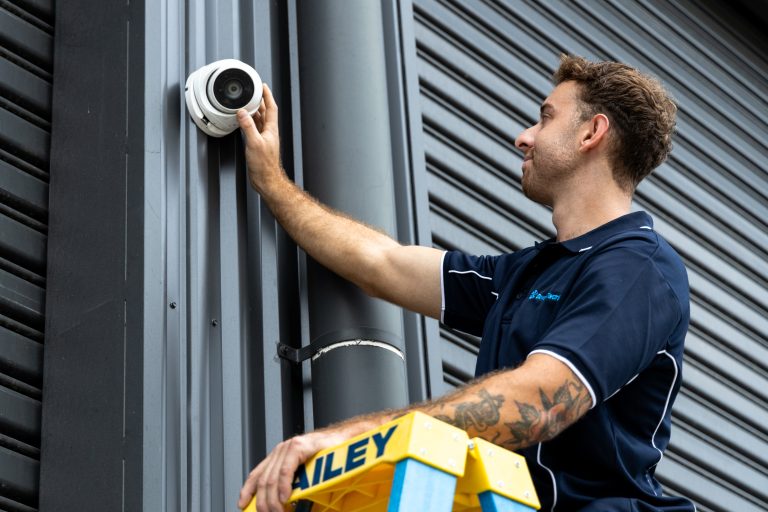
Our installations provide more than just a certificate. We focus on a trade-grade setup that handles Brisbane’s humidity without the usual nuisance trips.
Every installation includes:
We don’t charge hidden call-out fees, and we guarantee our technicians will be at your door on time*.
Under REIQ contracts, buyers can claim a 0.15% penalty at settlement if your smoke alarms aren’t compliant.
On an $800,000 sale, that’s $1,200 lost over a simple hardware error. We handle the full upgrade and provide the certificate needed to clear your Form 24 disclosure without delays.
or call now on 07 3324 1447
We’ve tested most brands on the market, but we stick with Clipsal photoelectric alarms for Brisbane homes.
The local humidity is brutal on cheap sensors; if the housing isn’t sealed properly, you’ll get moisture triggers in the middle of the night.
Whether we’re running new cabling for a hardwired system or using 10-year lithium battery units in a tricky spot, we match the hardware to your home’s specific wiring. It’s a reliable gear that actually stays quiet, backed by a genuine 10-year manufacturer’s warranty.
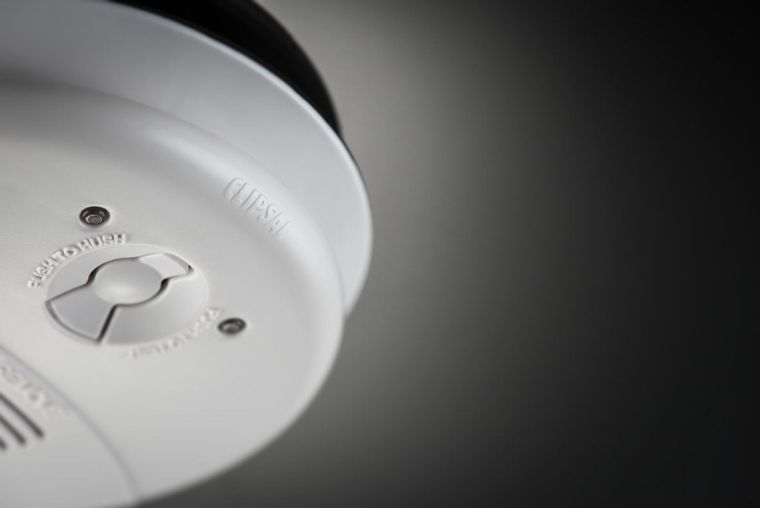
Smoke alarm requirements change depending on how you use the building. Whether it’s a family home needing a 2027 upgrade or a high-volume rent roll, we match the hardware to the specific legal standard and the property’s layout.
Owner-occupiers must meet the 2027 deadline. We pull out old standalone units and install interconnected photoelectric alarms. We focus on placement, keeping sensors away from bathroom steam while making sure they’re audible in every bedroom.
A non-compliant system can trigger a 0.15% penalty on your sale price. We prioritise these inspections to clear your Form 24 requirements quickly, so your settlement isn’t delayed by a hardware or paperwork error.
We manage annual RTA testing and cleaning to keep your investment covered. Our team issues the necessary compliance reports and handles battery replacements, providing a clear paper trail for your insurance and tenant safety records.
We work with agencies to maintain compliance across entire portfolios. From handling entry notices to uploading digital certificates immediately after the job, we take the scheduling off your desk and keep the data accurate.
The 2027 legislation is complex. Here is a direct breakdown of what you actually need to stay legal and safe in your Brisbane home.
Yes. If you are a landlord or seller, a compliance certificate is your proof of meeting the current Queensland laws. It is issued by the licensed electrician who performs the installation or inspection. Beyond the legal requirement, your home insurer will often request this document if you ever need to make a claim. We provide a digital copy immediately after testing to ensure that the entire system is properly interconnected.
The test button only confirms that the siren is loud. It says nothing about the sensor’s health.
Smoke alarms have a hard ten-year expiry; after that, internal components degrade or get choked by Brisbane dust. If you’re still using ionisation technology, you won’t meet the 2027 standards.
Those older units are slow to react to smouldering fires. We swap them for interconnected photoelectric hardware to keep the system legal and responsive. It’s a decade of safety, handled in one visit.
Hardwired alarms connect to your home’s 240V power and include a backup battery. These are mandatory for new builds. For existing homes where running new cables is difficult or expensive, we use 10-year sealed lithium battery units. Both versions now interconnect using radio frequency (RF). You get the same level of safety; if one sounds, they all sound, but battery-only units save you the cost of cutting into your walls and ceilings.
The 30-day window is non-negotiable.
Before a new lease or renewal starts in Queensland, the landlord has to ensure every alarm is cleaned, tested, and within its 10-year lifespan. It’s a hard reset on compliance. After that, the 12-month testing cycle shifts to the tenant.
If a sensor fails or starts chirping, they have to report it straight away. This handover is what keeps your liability covered if an inspector ever asks for the paper trail.
The rules are firm: you need one in every bedroom, one in the hallway connecting them, and at least one on every story. In a standard two-story home, that’s usually five or six units. We map out the placement to avoid “dead air” spaces in corners and keep them away from bathroom doors, where steam often causes nuisance triggers in our humid Brisbane climate.
If you’re talking about hardwired 240V units, the answer is no; the law requires a licensed electrician to touch the wiring.
You can buy DIY battery units, but you still have to nail the placement and the wireless link to meet the AS 3786:2014 standard. Most Brisbane homeowners realise pretty quickly that it’s not worth the headache. If you mess up the interconnection or the placement, you won’t get a compliance certificate, and that becomes a massive liability the second you try to sell the house.
Brisbane is heading for a massive 2027 backlog.
If you wait until the final months, finding a licensed sparkie will be a nightmare. We’ll get your interconnection sorted and hand over your certificate in a single visit. Don’t risk the scramble, get your home legal today.