

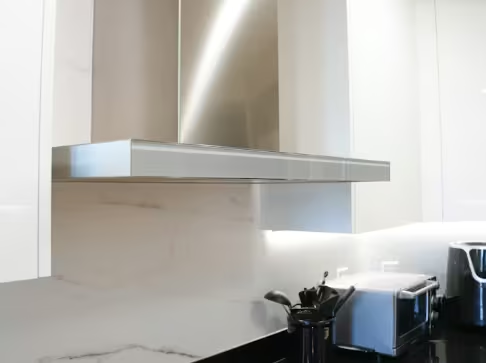
Rangehood installation only needs an electrician for the power. If your new unit plugs into a power point that’s already inside the cupboard above the cooktop, you can fit it yourself. You need a licensed electrician when there’s no power point, the old unit is hardwired, the rangehood is moving, or a remote motor needs power in the roof space.
The electrical side is the smallest part of the job. For us, it means one power point, in the overhead cupboard or up in the roof space. The hours go into the fit and the ducting, and most rangehood installation problems start there. Three trades can end up working on one kitchen, so plenty of people aren’t sure who installs range hoods.
Roof space is the other variable on any rangehood installation in Brisbane. Some low-pitched townhouse roofs leave barely enough room for a torch, let alone a duct.
Do You Need an Electrician to Install a Rangehood?
Only when the job goes past the plug. In Queensland, adding a power point or disconnecting a hardwired unit is licensed work under the Electrical Safety Act 2002. A unit that plugs into an existing socket isn’t.
For most rangehood installations in Brisbane, our part is a single power point in the overhead cupboard. Before fitting it, we check that the circuit feeding it has safety switch (RCD) protection. A new outlet above a cooktop doesn’t go on an unprotected circuit.
A rangehood going to a new position is a bigger job. The power and the duct both have to follow it. That means new holes in the cabinetry, and sometimes in the ceiling.
Buy the range hood first, then call. We can’t quote properly on a unit we haven’t seen the specs for. The spec sheet shows where the power needs to sit and where the motor is.
Who Installs Range Hoods?
Usually more than one trade. On a straightforward rangehood installation, what your kitchen already has decides the split.
Part of the job | Who does it |
Plug-in unit, socket already in place | You, or a handyman |
New power point, hardwired disconnection, power to a remote motor | Licensed electrician |
Flashing a duct through a tile or metal roof | Roof plumber |
Cabinetry cuts, mounting the hood, connecting the duct | Kitchen installer or carpenter |
A duct through a tile or metal roof needs flashing, which is a roof plumber’s job. We tell people that at the quote, so nobody ends up with a half-finished install and a leak.
Fixed-price swap services come up a lot when people look into who installs range hoods. They swap the unit and leave. Nobody checks the roof. If the old rangehood was venting into the ceiling, the new one will keep doing it.
If a kitchen renovation is on the way, settle on the rangehood before the overhead cupboards are built. The power point and duct path get decided early, long before the hood goes up. If you change your mind mid-reno, you’ll pay more than the same rangehood installation would have cost if it was planned from the start.
Can You Install a Rangehood Yourself?
Yes, if it plugs in and the socket is already there. In that case, the rangehood installation is a few screws and a plug.
The manufacturer’s manual shows how to install a rangehood of that particular model. It gives the bracket positions and the minimum height above your cooktop. Follow it over any general advice, ours included. Put cardboard over the cooktop first, and get a second person to hold the hood level while you fix the brackets.
Heavier than it looks.
Anything past the plug needs a licensed electrician. Unlicensed electrical work is illegal in Queensland and can complicate an insurance claim later.
Will a Rangehood Replacement Fit the Existing Cavity?
Width is rarely the issue. Rangehoods come in standard 600mm and 900mm widths. They differ in depth and in where the duct outlet sits.
Slide-outs are the hardest to replace. The model in your kitchen has more than likely been out of production for years, and today’s slide-outs are taller. Most people find that out with the old unit already off the wall. At that point, a simple rangehood installation has turned into carpentry, because the cupboard above has to be cut down or replaced.
So measure the cavity before you buy anything. Note which side the duct connects on, and photograph the rating label on the old unit while you’re up there.
Extraction should suit how you cook. A basic 300 m³/h unit won’t keep up with a wok. Be wary of the airflow figure on the box as well. Manufacturers measure it with no duct attached. Once a few metres of duct and a bend or two sit behind the same unit, it won’t get near that figure in a real kitchen.
Ducting makes a rangehood louder, and longer runs make it louder still. For a quiet kitchen, the motor needs to be out of the room altogether, on the roof or an outside wall.
What’s the Right Rangehood Height Above the Cooktop?
A new rangehood over a gas cooktop needs at least 650mm of clearance. The 2022 edition of AS/NZS 5601.1 raised this from 600mm. Electric and induction cooktops go by the manual, and most manuals say 600mm.
Cooktop | Minimum height of rangehood above cooktop |
Gas, new kitchen or new cabinets | 650mm |
Gas, existing installation | 600mm |
Electric or induction | Per the manual, often 600mm |
The 600mm figure for gas only applies in existing kitchens. New cabinets bring the 650mm clearance with them. Either manual can also ask for more than the standard requires, and some induction manuals do. Check yours before the cupboard height is locked in.
Rangehood height affects performance as well. Many manuals suggest 700mm to 750mm as a working height. Go much higher and extraction falls away.
What Does a Ducted Rangehood Installation Involve?
A duct runs from the hood to outside air, ideally through the nearest eave. A short, straight run performs best.
Before you assume your current rangehood is recirculating, put your head in the roof space and look for a duct. Plenty of people are wrong about their own rangehood.
Don’t vent into the roof space. Years of grease on the roof timbers is a fire risk, and it attracts vermin.
For the rangehood ducting installation itself, go out through an eave if one is close. That avoids a roof penetration and keeps the run shorter. We use rigid or semi-rigid metal duct. The foil flex sold for bathroom fans doesn’t hold up behind a rangehood. Fit a backdraft damper to keep out draughts and whatever has moved into your roof.
No eave nearby means a roof penetration and a roof plumber.
In a unit or townhouse, a duct through the external wall or roof passes through common property. The body corporate has to sign off first.
Remote-motor units are the most work of any ducted rangehood installation. We run power to the motor up on the roof or the outside wall, and the ducting has to be the brand’s own. Labour is higher on these.
How to Install a Rangehood: The Order of Work
Power and duct come first on any rangehood installation. The hood goes up last.
Most guides on how to install a rangehood start at the mounting bracket. With the order below, no trade has to come back twice.
- Measure the cavity.
- Buy the unit and keep the spec sheet for your electrician.
- Check the roof space for an existing duct, and for an eave close enough to exit through.
- Book the electrician for the power point or remote-motor supply. If the duct exits through the roof, book a roof plumber as well.
- Rangehood ducting installation: metal duct and a backdraft damper.
- Mount the hood at the right height and run it on every speed.
What Affects Rangehood Installation Cost?
Mostly, what’s already in place. A rangehood that plugs into an existing socket and connects to an existing duct is the cheapest version of the job by a long way.
Most of the variation sits in the rangehood ducting installation, and the roof is where rangehood installation cost in Brisbane jumps. A duct through tile or metal brings in a roof plumber for the flashing. In older homes, the run to the nearest exit is often longer than anyone expected.
Power is usually the smaller line on the quote, unless the unit has a remote motor.
Who installs range hoods on your job shapes the bill as much as the unit does. Every extra trade is another call-out. The cheapest answer to how to install a rangehood is a model that suits the power and duct you already have.
When you get a rangehood installation cost quote, ask for the unit and labour on separate lines. If Bunnings has the same model for noticeably less than the unit line, you’ll see it.
Booking Rangehood Installation in Brisbane
Our electricians handle the electrical side of rangehood installation across Brisbane, including power to remote motors in the roof space. Dawson Electric is a family business, run by Dylan and Kristine Dawson since 2007.
Pricing is fixed. The rangehood installation cost on your quote is the amount you pay, and if we’re late, our on-time guarantee applies. Include the model number when you get in touch. Contact our team or call 07 3324 1447.
Rangehood Installation FAQs
Only the electrical work. Anything beyond plugging into an existing socket has to be done by a licensed electrician in Queensland.
Not the disconnection. That part needs a licensed electrician. We usually fit a power point in the cupboard while we're there, and after that, the next rangehood replacement is a plug-in job you can do yourself.
Check whether it's recirculating first. Most of the rangehoods we see that "don't work properly" are set to recirculate with no carbon filters fitted, or with filters nobody has changed since installation. Carbon filters wear out. Without working ones, recirculation does very little. Clogged grease filters choke the airflow as well. A ducted unit that still struggles usually has a duct problem: crushed foil flex, or a long run with too many bends.
Often, if the old duct is metal and matches the new unit's outlet size. Replace any sagging or torn foil flex as part of the rangehood ducting installation. With the hood off, the duct is as easy to reach as it will ever be.
Inside the overhead cupboard, within reach of the rangehood's cord. Some leads are short, so send us the cord length from the spec sheet before we position the power point.
