

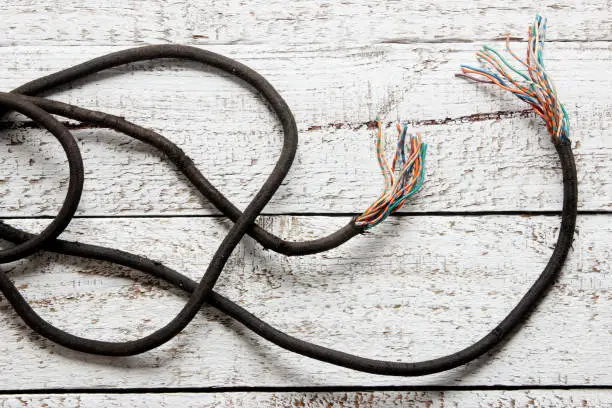
The warning signs of frayed wiring are usually present well before anything goes seriously wrong. Flickering lights. A burning smell that can’t be traced to anything visible. An outlet running warm with no obvious explanation. These aren’t minor inconveniences; they’re symptoms of damaged electrical wiring, and in Brisbane’s older housing stock, they deserve immediate attention.
Frayed wiring sits behind more house fires than most people realise. The problem develops inside walls, above ceilings, in subfloor cavities, completely out of sight until it stops being just a wiring problem.
This guide covers what to look for, what causes it, and what to do the moment something doesn’t seem right.
What Frayed Wiring Is
Inside every electrical cable runs a copper conductor carrying live current. The rubber or plastic insulation wrapped around it is what stops that current from escaping into the structure of the home. Once the insulation breaks down, the copper underneath becomes exposed.
Insulation fails for several common reasons. Heat and age make it brittle until it cracks. Rats and possums chew through cable runs in roof spaces and subfloors, an issue Brisbane has more of than most cities, given the prevalence of older timber housing. Pinch points where a cable runs against metal framing or under flooring wear the casing thin over the years.
Damaged electrical wiring is one of the leading causes of preventable house fires across the country. The deterioration is almost always hidden inside the wall cavity until a symptom finally surfaces at an outlet or the switchboard.
The Warning Signs of Damaged Electrical Wiring
Properties almost always signal a problem before it becomes a crisis. Here’s what that looks like.
Flickering or Dimming Lights
Change the bulb first. If the flickering continues after that, the bulb was never the problem. Lights that dim the moment the air conditioner starts up are showing circuit load, not a faulty fitting. The washing machine is another common culprit. High-draw appliances pull significant current on startup, which can cause a momentary voltage drop across a shared circuit. Neither symptom gets fixed by changing the globe. A licensed electrician needs to look at what is happening inside the circuit, particularly in older Brisbane homes where the original wiring is pushing its age.
Sparking Outlets
Any spark from a power point or switch plate warrants attention. A very brief flash when plugging in an appliance can occasionally occur, but recurring sparks, visible arcing, or a sound accompanying it all point to an unstable connection.
Unstable connections generate heat. Heat degrades insulation. The progression from sparking outlets to an active electrical fire hazard moves faster than most people expect.
Why Is My Power Outlet Hot to the Touch?
Power points should sit at room temperature. A warm outlet is unusual. A hot one needs attention today, not next week. The heat usually traces back to frayed or damaged wiring behind the wall, or a loose terminal connection. For older Brisbane properties where circuits have not been inspected in years, an overloaded circuit can be a contributing factor, too. Take the outlet out of service and contact a qualified electrician.
A Faint Burning Smell in a Wall With No Obvious Source
This is the warning sign that gets dismissed most often.
A vague smell, burnt plastic, something rubbery, that doesn’t match anything visible. No smoke. No scorch marks. No obvious explanation. Most people assume it’s coming from outside, or from a neighbour’s property.
In the majority of cases, that smell is electrical insulation overheating inside the wall cavity. The wiring is already failing. Isolate the circuit and call a qualified electrician without delay, this isn’t a situation where monitoring it overnight is a reasonable response.
Electrical Outlet Clicking or Buzzing Sound
Electrical outlets and switches should be silent. A buzzing sound from a power point is not ambient noise from whatever is plugged in. It is electricity arcing inside the fitting, jumping across connections that have degraded or come loose. That arcing generates significant heat in a very small space and carries a genuine risk of electrical fire. Any outlet making that noise consistently needs to come out of service immediately.
Scorch Marks or Discolouration Around Outlets
Brown or black staining around a power point isn’t cosmetic. It’s evidence that heat has already escaped the fitting, meaning the fault behind the wall has already fired at some point, even if nothing catastrophic resulted.
The outlet needs replacing. The circuit feeding it needs a full inspection along its length.
Frequently Tripped Breakers
Circuit breakers trip for a reason. One appliance tripping breakers across multiple circuits usually points back to the appliance itself. But the same breaker tripping repeatedly, especially on a circuit in an older section of the property, often indicates wiring that’s no longer handling normal load safely.
What Causes Frayed Wiring in Brisbane Homes?
Several factors drive electrical wiring failure, and most Brisbane properties carry at least one.
Age
Insulation has a finite service life. Brisbane’s heat and humidity accelerate degradation; rubber-insulated cables from the 1950s and 60s have frequently become brittle and prone to cracking, well before anyone considers replacing them. Any property over 25 years old warrants inspection regardless of visible symptoms.
Rodents
Rats, mice, and possums regularly access roof spaces in older Queensland homes. Rodent chewed wires in ceiling cavities, and subfloors is one of the most common findings during electrical inspections, and it rarely surfaces below until a fault has been active for some time. The insulation is stripped quietly. The exposed live conductors sit in contact with timber framing or insulation batts.
Heat exposure
Circuits running consistently near their rated capacity generate internal temperatures that gradually destroy insulation from the inside. No visible sign externally. Just accelerating deterioration.
Physical damage
Cables pinched under flooring, jammed against metal framing, or bent sharply during installation develop weak points over the years. The failure doesn’t happen immediately; it builds.
Wiring Types Found in Older Brisbane Properties
Three older wiring systems still appear regularly in Brisbane properties.
Knob and Tube Wiring
Knob and tube wiring dates from before 1940. It uses ceramic knobs fixed to structural timbers and separate porcelain tubes that carry individual conductors through the framing. There is no earth conductor. The system was never designed for the loads a modern Brisbane home puts through it, and the insulation on any remaining runs will have significantly degraded with age. Finding knob and tube wiring in an accessible roof space or subfloor is grounds for a professional inspection without delay.
Vintage Cloth or Rag Wiring
Vintage cloth or rag wiring (1940s–1950s), braided cloth over rubber conductors. The cloth frays. The rubber hardens and cracks. Vintage cloth rag wiring is not safe for continued use. There’s no grey area on that one.
Aluminium Wiring
Aluminium wiring turns up in Brisbane homes built roughly from the mid-1960s through to the early 1970s, when copper was in short supply, and aluminium became the substitute. It behaves differently from copper under heat. It moves more, and over the years, that movement works the terminal connections loose. That is where localised heat builds, and eventually where faults start. That might seem like a slow process. Left uninspected, it is not.
The simplest way to begin identifying aluminium wiring in an older Brisbane home is to check the cable jacket where it enters the switchboard. An “AL” marking confirms it. The bare conductor itself looks silvery rather than copper-toned. Properties carrying aluminium wiring need to be on a regular inspection schedule. Most will eventually require full professional rewiring to meet current safety standards.
Signs a house needs complete rewiring tend to appear as recurring faults across multiple circuits, not isolated incidents. Persistent flickering across different rooms, frequent breaker trips on separate circuits, and ongoing warm outlets. That pattern points to systemic failure, not a single loose connection.
What to Do When Frayed Wiring Is Suspected
Don’t touch it. Assume any exposed wiring is live. Clear the area, children and pets away from the fault.
Isolate the circuit. At the switchboard, switch off the breaker controlling the affected area.
If the affected circuit cannot be identified with confidence, switch off the main. The next call goes to a licensed electrician. Any active sign of trouble at the switchboard itself, whether that is sparking, a buzzing sound, scorch marks or a burning smell coming from the panel, calls for a 24/7 emergency electrician without delay. Frayed wiring at that point will not resolve on its own.
Queensland electricians are licensed and required to certify all work against AS/NZS 3000, the national wiring rules that cover every electrical installation in Australia. Unlicensed electrical work breaches the Electrical Safety Regulation 2013. Beyond the legal exposure, it typically voids building insurance if a fault later causes damage.
The Reason Annual Electrical Safety Inspections Matter
Most electrical faults develop slowly. Annual inspections catch deteriorating insulation, loose connections, and outdated wiring before symptoms appear, not after. For Brisbane properties built before 1980, that isn’t overcaution. It’s appropriate maintenance given the age of the wiring, the climate, and the history of materials used.
A licensed electrician will test every circuit, inspect the switchboard, verify safety switch operation under Queensland’s Electrical Safety Regulation 2013, and flag wiring approaching the end of its service life. For rental properties, that inspection also satisfies the landlord’s electrical safety compliance certificate obligations.
None of these faults improves on its own. Frayed or damaged electrical wiring generates heat inside the wall cavity, and in an enclosed cavity, that heat builds. Every symptom in this guide is a fault already in progress, not a warning of what might happen later.
Spot any of them and isolate the affected circuit at the switchboard. Then contact us to speak with a licensed electrician. Active symptoms, particularly anything involving the switchboard itself, need a 24/7 emergency electrician. A burning smell from the panel is not something to investigate in the morning. If a full inspection finds deterioration across multiple circuits, professional rewiring is the outcome.
Frequently Asked Questions
Most washing machines pull a heavy burst of current when the motor starts up. On circuits where the lighting runs close to the appliance circuit, or shares a junction point, that surge produces a visible voltage drop. The result is the momentary dimming you notice when the cycle begins. If it settles quickly, the circuit may simply be showing its age. If the flickering persists or is getting worse, the terminal connections on that run need inspecting. A licensed electrician can trace the circuit and confirm whether it is load behaviour or something failing.
In Queensland, landlords carry a legal obligation to maintain rental properties at a defined electrical safety standard. The Electrical Safety Regulation requires functional safety switches across every power and lighting circuit. It also requires smoke alarms in compliance with current legislation, and a valid landlord electrical safety compliance certificate to be held where the regulation calls for one.
Owner-occupied homes sit outside that statutory cycle. Annual inspection by a licensed electrician is the recommendation for any property built before the late 1980s, and for any home where the wiring history is unknown.
Yes. All electrical work must be performed by a licensed electrician. This covers outlet replacements, fitting installations, and any modification to fixed wiring. Unlicensed electrical work carries substantial penalties, and critically, it voids building insurance in the event of a fault or fire.
In accessible ceiling spaces or near older fuse boxes, cloth rag wiring appears as braided fabric over individual conductors, often visibly fraying with hardened rubber underneath. Knob and tube uses ceramic knobs mounted to structural timbers, with no earth conductor and no outer sheath. Both require professional assessment immediately, not at the next scheduled inspection.
A faint burning smell in a wall with no traceable source is almost always electrical in origin. The most likely explanation is insulation around a conductor inside the cavity reaching the point of melting or scorching. The wiring is already failing at that stage, even if no other symptom has surfaced.
Treating the smell as something to investigate when there is time is a mistake. The correct response is to isolate the relevant circuit at the switchboard and arrange for a qualified electrician to inspect the run before continued use.
