

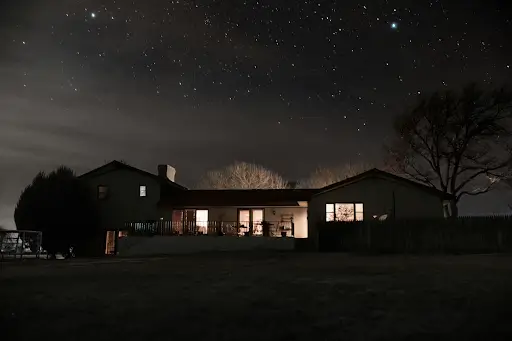
Half your house is dark. The other half is fine.
It’s a strange feeling. At least a full blackout is straightforward. This is confusing. The bedroom works, the kitchen doesn’t. Or the lights come on, but nothing plugs in. You reset the switch, it trips again, and now you’re standing in front of the switchboard with no idea what you’re actually looking at.
Here’s what’s likely going on.
Why Only Half the House?
Your home isn’t running on one big circuit. It’s a collection of smaller ones, each with its own breaker. When one trips or fails, that circuit goes dark. Everything else stays on. That’s why half the house loses power, and the other half doesn’t even blink.
Most of the time, a tripped breaker is the culprit. One circuit gets overloaded, too many high-draw appliances at once, a failing appliance, a short somewhere, and the breaker flips to protect the wiring. Reset it, and it holds. That’s the best case.
A faulty safety switch is the next most likely cause. Safety switches protect against current leaking to earth, the kind of fault that electrocutes people rather than just blowing a fuse. When one trips, it can kill power to a whole section of the house. Lights on, power points dead. Or the reverse. Depends on how the circuits are grouped behind the board.
A loose neutral connection is more serious than either of those. A broken or degraded neutral, inside the switchboard or back in the mains supply, causes uneven voltage across circuits. Lights flicker. Appliances behave strangely. Some things fail while others keep running. It’s not always obvious what’s happening, which is part of what makes it dangerous. Left alone, it damages appliances and raises fire risk.
Then there’s the supply fault. In some areas, power is delivered in two phases. If one drops out at the street, a blown pole fuse, or a network issue, you lose everything connected to that phase. Half the house goes dark, the other half stays on, and there’s nothing wrong with your wiring at all. That’s your electricity distributor’s problem to fix, not yours.
Older homes are more exposed to most of these issues. Ageing wiring, switchboards that weren’t designed for modern electrical loads, connections that have loosened over decades. If your home was built before the 1990s, partial outages are worth taking seriously.
What You Can Check Yourself
Keep this short; there isn’t much.
Go to your switchboard. Look for a breaker or safety switch sitting in a different position to the others, visibly off, or stuck in the middle, which means it’s tripped. That’s your starting point.
Try resetting it. Push it fully off first, then back on. If it stays on and the power returns, monitor it. If it trips again immediately, leave it off. Unplug everything on that circuit and try once more. Still trips? There’s a fault that needs testing, not more resetting.
Check whether your neighbours are affected. If the street is partially out, call your electricity distributor, not an electrician.
That’s the full extent of what a homeowner should be doing. Don’t open panels, don’t touch wiring, don’t assume that because something looks simple it is.
Warning Signs That Make This Urgent
A partial outage from a tripped breaker is annoying, not dangerous. A partial outage caused by something deeper is a different situation entirely.
Stop and call an electrician straight away if you notice any of these:
- Flickering lights that don’t correspond to anything obvious
- Lights dimming or getting noticeably brighter when appliances switch on
- A burning smell near the switchboard or any power point
- Buzzing or crackling sounds from the board
- Outlets or switch plates that feel warm to the touch
These point to a loose neutral, a high-resistance fault, or damaged wiring. The partial outage isn’t the problem in those cases. It’s a symptom of something worse.
The Switchboard Is Usually Where This Starts
Not always, but usually.
Switchboards take a lot of punishment over the life of a house. Breakers age. Connections loosen. Older boards weren’t built for the number of circuits a modern household runs. In Brisbane, especially, heat and humidity accelerate deterioration in ways that aren’t visible until something fails.
If your switchboard is more than 15–20 years old, still has ceramic fuses rather than modern breakers, or lacks safety switches on all circuits, a partial outage is sometimes the first sign that the board itself needs attention, not just a reset. Worth getting assessed while you’re already having an electrician out.
What a Licensed Electrician Actually Does
When an electrician responds to a partial outage, they’re not just flipping a switch back on. The job is to find out why it tripped in the first place.
That means testing voltage across circuits for imbalance, inspecting the switchboard for failed components or loose connections, checking the mains supply if the fault might be external, and tracing wiring if a fault is hiding in the walls. Once found, they fix it and issue the compliance paperwork that confirms the work is done properly.
If there’s a deeper issue with the board, they’ll give you options. Sometimes it’s a straightforward repair. Sometimes a switchboard upgrade is the right call, particularly if the board is already showing multiple warning signs. A good electrician will tell you which it is and why.
What you should never do is hire someone unlicensed to sort it out. Unlicensed electrical work creates liability issues and genuine safety risks that follow the property long after the person who did the work is gone.
Before the Electrician Arrives
While you’re waiting for someone to arrive, don’t just sit with the problem.
Unplug high-draw appliances from the affected circuits, such as heaters, washing machines, and air conditioners. If there’s been a recent storm or you suspect water near any wiring, leave those outlets alone entirely. And make a note of which breakers are sitting differently from the others before you call; that information actually helps narrow things down quickly.
One more thing. If a burning smell develops or the situation gets noticeably worse rather than stable, don’t wait. Get everyone out.
The Bottom Line
Half the house losing power is rarely a disaster. Usually, it’s a tripped breaker, an overloaded circuit, something fixable. But the same symptom can point to a fault that’s genuinely dangerous, and you can’t always tell the difference from the outside.Check the switchboard. Try the reset once. If it holds, watch it. If it doesn’t, leave it off and contact Dawson Electric, because the next step requires someone who can actually test what’s happening, not just guess.
