

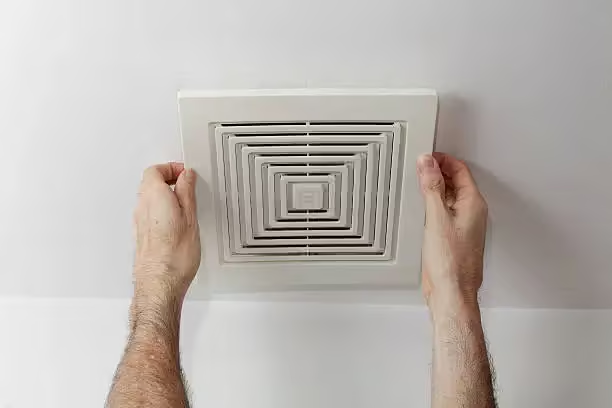
A bathroom exhaust fan above shower level is allowed. The catch is that it has to be rated for the zone it ends up in. AS/NZS 3000, which electricians call the Wiring Rules, splits a bathroom into zones based on how much water is likely to reach each part.
Zone 0 is the inside of the shower base or bath. For a shower, Zone 1 is the space within 1.2 metres of the fixed shower outlet, measured horizontally, from the floor up to 2.5 metres. A fixed screen or wall can cut that distance short. Zone 2 is the 600mm band beyond Zone 1.
Many Brisbane bathrooms have a 2.4 metre ceiling, so a ceiling fan over the shower falls inside Zone 1. Equipment there needs a minimum rating of IPX4, which means it is protected against water splashed from any direction. Most fans sold off the shelf are not built to that level. A shower exhaust fan made for the purpose states its IP rating on the carton and in the installation instructions.
So you can do it legally with an IPX4 fan over the shower, or with an ordinary one moved out past the edge of Zone 1. We nearly always recommend the second because it’s cheaper and nobody gets a draught down their back.
Lights and power points are placed by the same zones, which is why the fan is best sorted out with them. When a bathroom is being redone, we plan the bathroom exhaust fan installation before the ceiling is sheeted, so nobody is cutting holes in new plasterboard a month later. A new fan circuit has to have safety switch protection as well, and in older bathrooms the existing wiring often doesn’t.
Why does a bathroom fan need replacement air?
A fan cannot pull air out of a sealed room. With the door shut, the window closed, and tight seals all round, even a large unit moves very little. Most installers never check for this.
The fix belongs at the door. Opening a window works, but only when someone remembers to do it. Trimming 20 to 30mm off the bottom of the door, or fitting a door grille, lets the fan do its job every time without anyone thinking about it.
A bigger fan is not the answer to a starved one. We see people replace a fan twice before anyone checks where the air is coming from. Any bathroom ventilation fan is limited by its supply, whatever figure is printed on the carton.
Does a bathroom exhaust fan have to vent outside?
For new homes and renovations that need building approval, yes. Bathroom exhaust fan regulations Australia-wide come from two documents. AS/NZS 3000 covers the electrical side. The National Construction Code covers airflow and discharge.
NCC 2022 sets the numbers. A bathroom exhaust fan has to move at least 25 litres of air a second (90 m³/h) and send it to outdoor air, either straight out or through a duct. If the bathroom has no window that opens, the fan also has to come on with the light and keep running for 10 minutes once the light is switched off.
It wasn’t always that strict. Earlier editions of the code let a fan discharge into the roof space provided the roof space was ventilated, and before that nobody was checking. That’s why so many older Brisbane homes have a fan that goes nowhere. A bathroom exhaust fan not vented outside still spins and still sounds like it’s working. All that steam is going into the ceiling cavity, though, and it ends up in the insulation and on the back of the plasterboard.
Nobody is going to make you rip out an existing fan because the code changed. We’d still fix it. Roof moisture does its damage slowly, and the first sign is usually mould or a brown stain on the ceiling a few years on. If you’re not sure what yours does, we can look in the roof space as part of an electrical safety check and tell you where the duct ends, or whether it has one.
How should a bathroom exhaust fan duct be run?
Short and straight. Every bend costs airflow, so a fan a metre from an external wall should go out through that wall. Past that, good bathroom fan venting comes down to four things.
- Match the duct to the outlet. If the fan has a 150mm outlet, run 150mm duct. Step it down to 100mm and you’ve paid for airflow you’ll never get.
- Keep flexible duct for short runs. Its ridges slow the air and its sags collect water. Pull it tight, and use rigid duct on anything long.
- Fall the duct towards the outside. Condensation then drains out through the vent and does not run back through the fan onto the ceiling.
- Finish at a proper outlet. That means a wall vent, a roof cowl or an eave grille, with the duct physically connected to it.
Eaves are fine, with one condition. You can take an exhaust fan to outside air through the eave if the duct is clamped onto a proper eave grille. What we see more often is a duct left lying near the perforated eave lining, and the damp air just drifts back up into the roof.
Treat the airflow figure on the box with some scepticism. Rated airflow is measured with no duct attached. Add three metres of flex and two bends, and the bathroom exhaust fan duct delivers noticeably less than the label suggests.
Is a ducted exhaust fan or an inline fan the better choice?
Both are ducted. The difference is where the motor sits. A standard ducted exhaust fan has its motor in the ceiling fitting, directly above the room. An inline fan puts the motor in the roof space, partway along the duct, with only a grille visible from below.
Inline units are underrated. They cope better with the resistance of a long duct and they are quieter, since the motor is well away from the room. For a bathroom a long way from an external wall, or a shower exhaust fan that has to sit over the recess, inline is often the stronger option.
Do run-on timers and heated mirrors make a difference?
Run-on timers matter more than fan size. Ten to twenty minutes of running after the shower does more than an extra 40 m³/h of capacity, because wet walls and ceilings keep giving off moisture after the water is turned off. A timer can be added to most existing fans.
A foggy mirror is a separate problem. A bathroom exhaust fan is there to protect paint, cornice and ceiling. It will not keep a mirror clear during a hot shower, and extra airflow does not change that. A heated mirror, or a demister pad behind the glass, does.
Who can install a bathroom exhaust fan in Brisbane?
Fixed wiring is licensed work in Queensland under the Electrical Safety Act 2002, and a fan is fixed wiring. Bathroom exhaust fan installation means connecting into a circuit (or running a new one), fitting a switch or timer and mounting equipment in a wet area, so it needs a licensed electrician. If you’re handy, running the duct yourself is fine. The connection isn’t a DIY job.
For most of the bathroom exhaust fan installation Brisbane homeowners book with us, we start in the roof before we look at fans. We want to know where the old duct goes, how far it is to an outside wall or an eave, and whether enough air can get in under the door. Only then do we pick the fan.
A fan that runs but does not clear the room
When a fan runs and the bathroom stays damp, the cause is usually in the roof space or at the door. Both can be checked in one visit. Dawson Electric has been working in Brisbane homes since 2007, and we install and replace exhaust fans across the city. To have yours assessed, contact our team.
Frequently Asked Questions
In new homes and approved renovations, yes. NCC 2022 requires bathroom exhaust to discharge to outdoor air. In an existing home with a fan that empties into the roof, outside venting is still the standard to work towards.
Only if it is rated for the zone. With a ceiling below 2.5 metres, a fan over the shower is in Zone 1 under AS/NZS 3000 and needs at least IPX4. A standard fan belongs outside that zone.
The NCC minimum is 25 litres per second, or 90 m³/h. Allow more where the duct is long or has bends. A larger fan will not fix a room that has no replacement air.
Ten to twenty minutes. A run-on timer handles this automatically, and it is required on a new installation in a bathroom without an openable window.
Yes, where the duct connects to a purpose-made eave grille. A duct left pointing at perforated eave lining lets the moist air back into the roof space.
